B2B brand strategy: a practical guide for marketing leaders
Unlock the power of a B2B brand strategy with our practical guide. Learn to position, message, and activate your brand effectively.

B2B brand strategy: a practical guide for marketing leaders
A B2B brand strategy is a deliberate plan that makes your business easier to choose — by the right buying groups, at the right moment, for the right reasons. The fastest way to start is to run a focused positioning workshop that produces three things: category clarity, one primary buying group, and a one-line customer promise that your sales team will actually use.
The rest of this guide covers everything you need to build and activate that strategy.
Positioning — where you play and how you win
Messaging — what you say and to whom
Visual identity — how you look and feel across every touchpoint
Activation — how you get the brand into the market
Measurement — how you prove it is working to finance and the board
Pro Tip: Before you read further, write down your current one-line customer promise. If you cannot do it in under fifteen seconds, your positioning work starts there.
Table of Contents
What is a B2B brand strategy, and how does it differ from B2C?
Why does brand investment matter in B2B?
What are the core components of a B2B brand strategy?
How do you build a B2B brand strategy step by step?
How do you measure brand impact and link it to revenue?
UK timelines, typical costs, and the brand-to-demand budget model
How do you embed the brand across your organisation?
What are the most common B2B brand strategy pitfalls?
Key takeaways
Why the brand-first approach actually pays off
Brands & Co: brand strategy and creative for UK businesses
Useful sources and further reading
FAQ
What is a B2B brand strategy, and how does it differ from B2C?
A B2B brand strategy is a structured approach to building commercial preference among buying groups — the multiple stakeholders who collectively decide whether to choose, renew, or expand a relationship with your business. It is not a logo project. It is a revenue instrument.
The distinction from B2C matters because the mechanics of the buying decision are fundamentally different:
Buying groups, not individuals. A typical B2B purchase involves several stakeholders — economic buyers, technical validators, end users, and procurement. Your brand must work across all of them simultaneously.
Longer cycles, higher stakes. B2B purchases carry organisational risk. Trust and credibility must be established before a conversation begins, not during it.
Evidence over emotion. Emotional resonance still matters, but it must be anchored in proof: case studies, accreditations, measurable outcomes. Feeling good about a vendor is not enough.
Functional and emotional drivers coexist. A CFO needs a business case. A marketing director needs confidence that the agency will not embarrass them. Both are real, and both must be addressed.
The practical implication: your positioning must be pragmatic and outcome-focused. Generic claims about quality or partnership mean nothing to a procurement team with a scoring matrix. Specific, evidenced value propositions do.
Why does brand investment matter in B2B?
Brand is not a soft spend. It is the infrastructure that makes every other marketing and sales investment work harder.

B2B buyers increasingly research and shortlist vendors before contacting sales. By the time your team gets a call, the shortlist is often already formed. A brand that has not built recognition, credibility, and category clarity before that moment is starting from behind.
The commercial effects are concrete:
Shorter evaluation cycles. Buyers who already recognise and trust your brand spend less time validating you, which compresses the sales cycle.
Higher win rates. Familiarity reduces perceived risk. Buying groups are more likely to choose a vendor they have encountered consistently across multiple channels.
Pricing power. Specialisation and clear positioning increase perceived expertise. When you are known for something specific, price becomes a secondary consideration rather than the primary one.
Retention and expansion. A clear brand promise, consistently delivered, builds the trust that underpins renewals and upsells.
The buyer psychology at work here is about memory structures. Buying groups do not evaluate every vendor from scratch each time. They recall the names that have shown up consistently, clearly, and credibly in the spaces they inhabit — LinkedIn, industry events, peer recommendations, dark social channels that conventional attribution never captures. Brand investment builds those memory structures over time.
The measurement section below shows how to convert these brand signals into pipeline and revenue metrics your finance team will recognise.
What are the core components of a B2B brand strategy?
Think of these as the modules your team can own, resource, and build in sequence. Each one connects to a buyer outcome.
Purpose and values. Why the business exists beyond revenue. Buyers and employees both need this, and it anchors every other decision.
Positioning. Where you play in the category and how you win. The output is a category map that shows your distinct space relative to the problem you solve. Effective B2B brand positioning requires category clarity, audience focus, and a distinct value — without all three, you slide back into feature parity and price competition.
Value proposition. The specific, evidenced promise you make to each buying group. Not a tagline — a structured claim with proof.
Brand architecture. How your products, services, or sub-brands relate to each other. The core decision is whether to run a branded house (one master brand) or a house of brands (independent product brands). The brand architecture models guide from Brands & Co walks through the decision triggers in detail.
Messaging pillars. Three to five themes that every piece of content and every sales conversation should reinforce. Each pillar needs a proof module — a stat, a case study, or a client outcome that makes it credible.
Visual identity. Logo, colour, typography, imagery, and the rules that govern their use. Brand style tiles are a practical tool for rapid visual alignment before a full identity system is built.
Experience design. How the brand shows up at every touchpoint — website, proposals, onboarding, customer success. Consistency here is what turns a positioning statement into a felt reality.
Sales enablement. The proof assets, battle cards, and messaging guides that put the brand to work in commercial conversations.
Governance. The rules, roles, and processes that keep the brand consistent as the organisation scales. Covered in detail in the governance section below.
How do you build a B2B brand strategy step by step?
A relaunch typically runs over several months with ongoing quarterly refinements. Here is the workflow.
The process in sequence
Discovery. Stakeholder interviews, ICP analysis, competitor audit, and a review of existing brand assets. Map your current position honestly.
Positioning workshop. A focused session (one to two days) that produces category clarity, a defined primary buying group, and a draft one-line customer promise. Test the output with two or three salespeople before you proceed.
Value proposition mapping. Translate the positioning into specific, evidenced promises for each stakeholder in the buying group. Use customer journey mapping to align messages to the moments that matter.
Messaging hierarchy. Build the messaging architecture — brand narrative, pillar statements, proof modules, and tone of voice. The tone of voice guidelines template from Brands & Co is a practical starting point.
Identity brief. Brief the creative team with a clear positioning input, not a vague mood board. Rapid validation using style tiles reduces wasted creative rounds.
Activation plan. Map the brand to channels — website, LinkedIn, content, events, sales materials. Prioritise the touchpoints your buying group actually uses.
Measurement design. Set your baseline metrics before launch, not after. Define which brand indicators you will track and how they connect to pipeline KPIs.
Recommended timeline
Phase | Duration | Primary owner |
|---|---|---|
Discovery and audit | several weeks | Strategy lead |
Positioning workshop | about a week | Senior marketing + leadership |
Value proposition and messaging | several weeks | Marketing and sales |
Identity and creative | multiple weeks | Creative team or agency |
Activation planning | one to two weeks | Marketing operations |
Launch and QA | about a week | Brand manager |
Total relaunch window | a few months | Cross-functional |

Pro Tip: Run your draft positioning statement past three salespeople before you brief the creative team. If they cannot use it in a conversation, it is not ready. Sales validation is the fastest and cheapest form of proposition testing available.
How do you measure brand impact and link it to revenue?
Brand measurement fails when it stops at awareness. The goal is to connect leading brand indicators to the revenue KPIs your finance team already tracks.
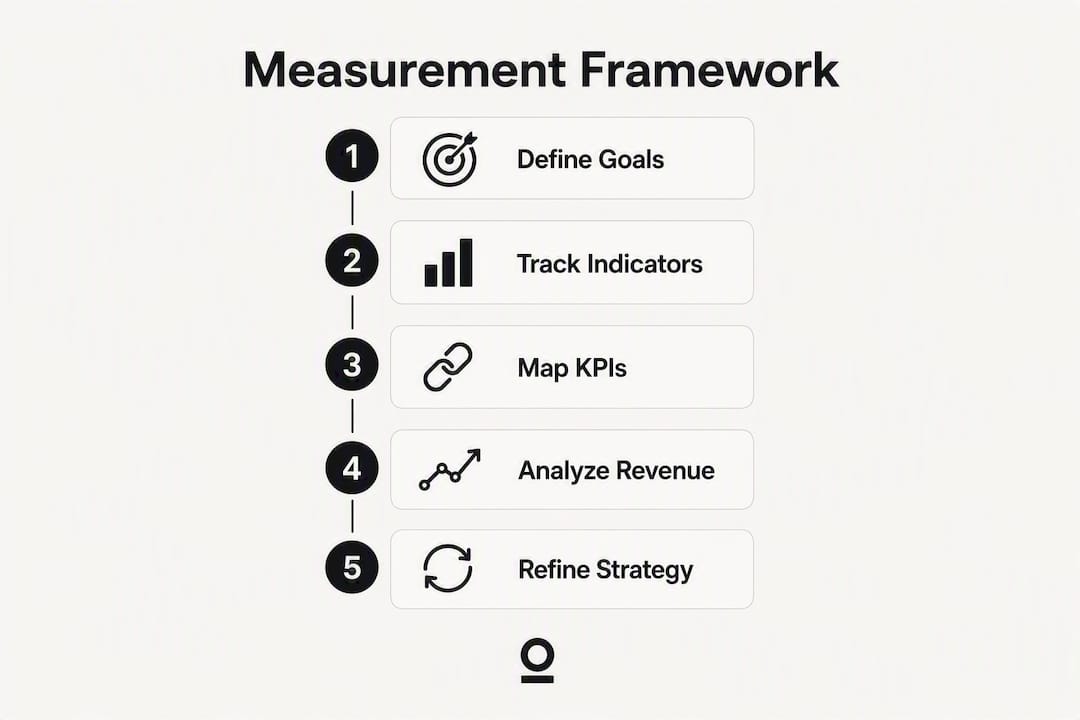
The measurement framework
Set a baseline. Before launch, capture your current share of search, aided and unaided awareness (via a brand tracking survey), and your pipeline velocity and win rate from CRM.
Instrument your channels. Implement marketing mix modelling (MMM) and multi-touch attribution (MTA) to understand which brand investments are driving pipeline contribution.
Run brand lift and incrementality tests. Controlled experiments — pausing brand spend in one region or segment while maintaining it in another — give you the cleanest read on brand’s incremental effect.
Report to finance cadence. Monthly brand health dashboard for the marketing team; quarterly revenue-linked summary for finance and the board.
Successful programmes map brand health indicators directly to revenue KPIs — share of search to pipeline velocity, brand lift to win rate lift — so brand investment survives budget scrutiny.
Brand metrics mapped to business questions
Metric | Business question it answers | Suggested data source |
|---|---|---|
Share of search | Are we gaining category visibility? | Google Search Console, SEMrush |
Aided/unaided awareness | Do buyers know us before we call? | Brand tracking survey |
Brand lift | Is our advertising building recognition? | Controlled lift study |
Pipeline created (brand-influenced) | Is brand driving commercial opportunity? | CRM + MMM |
Win rate lift | Are known brands winning more deals? | CRM cohort analysis |
ACV expansion | Are existing clients growing with us? | CRM / finance |
UK timelines, typical costs, and the brand-to-demand budget model
The 40/40/20 budget split
A modern brand-to-demand operating model recommends splitting budgets 40/40/20: 40% brand creation, 40% demand creation, and 20% demand capture. The rationale is straightforward — brand creation builds the memory structures and category authority that make demand generation more efficient, while demand capture (paid search, retargeting) converts the intent that brand has already created. Skewing too heavily toward demand capture produces short-term pipeline at the cost of long-term pricing power and win rates.
For UK organisations, this model also helps structure conversations with finance. Rather than defending brand spend as intangible, you present it as the upstream investment that reduces the cost of demand generation over time.
Typical UK cost brackets
For visual identity work specifically, the logo design cost guide from Brands & Co gives detailed UK benchmarks for small and growing businesses.
Business case template outline
When presenting to the board, structure your case around four points: current brand gap (what the audit revealed), commercial opportunity (win rate and pipeline data), proposed investment (using the 40/40/20 split), and measurement plan (the KPIs that will prove return). Keep it to one page. Finance teams respond to specificity, not vision decks.
How do you embed the brand across your organisation?
A brand that lives only in the marketing team’s files is not a brand — it is a document. Embedding requires governance, clear ownership, and a training plan.
Governance essentials
Brand council. A small cross-functional group (marketing, sales, product, leadership) that meets quarterly to review brand health, approve major creative decisions, and resolve conflicts.
RACI. Define who is Responsible, Accountable, Consulted, and Informed for brand strategy, asset creation, and compliance. Ambiguity here is where brand consistency breaks down.
Approval SLAs. Set clear turnaround times for brand reviews so teams do not bypass the process out of frustration.
Digital brand hub. A single, accessible repository for all brand assets, guidelines, and templates. This is the practical tool that reduces brand defects at scale.
Role responsibilities
Role | Owns | Measures |
|---|---|---|
CMO / Marketing Director | Brand strategy and positioning | Brand health KPIs, pipeline contribution |
Brand Manager | Asset creation and governance | Compliance rate, asset usage |
Sales Director | Messaging adoption in commercial conversations | Win rate, proposal quality |
Customer Success | Brand experience post-sale | NPS, retention, expansion |
Launch checklist
Use the website branding checklist from Brands & Co as your QA baseline for digital touchpoints. Beyond the website, your launch checklist should cover: updated sales decks and proposals, LinkedIn company page refresh, email signatures, case study templates, and a short internal briefing session for sales and customer success. The briefing is not optional — it is where the brand moves from strategy to conversation.
What are the most common B2B brand strategy pitfalls?
Most brand programmes do not fail because the strategy was wrong. They fail because of predictable, avoidable mistakes.
Common pitfalls:
Trying to serve everyone. Over-broad positioning weakens authority and makes it harder for buyers to self-select. Specialisation is a commercial advantage, not a limitation.
Measuring only awareness. Awareness without a connection to pipeline is a vanity metric. If you cannot show how brand investment influences win rate or deal velocity, you will lose the budget argument.
Weak proof. Messaging pillars without case studies, client outcomes, or data are just claims. Buying groups, especially technical validators and procurement, need evidence.
Fragmented application. A brand that looks different on the website, in proposals, and at events signals internal disorganisation. Buyers notice.
Ignoring procurement and technical validators. These stakeholders often have veto power. If your messaging only speaks to the economic buyer, you are leaving decisions to chance.
Red flags that a programme will not stick:
No senior stakeholder alignment before the creative brief is written
No measurement plan agreed before launch
No proof assets (case studies, data, accreditations) to support the messaging
Brand guidelines delivered but no training plan for sales
Readiness checklist — before you commit budget:
[ ] Do you have a clear, agreed ICP and primary buying group?
[ ] Can your sales team articulate your positioning in one sentence?
[ ] Do you have at least two proof assets (case studies or data) per messaging pillar?
[ ] Is there a named owner for brand governance?
[ ] Do you have a baseline measurement in place?
[ ] Is there senior leadership alignment on the positioning?
[ ] Do you have a 90-day activation plan ready to run post-launch?
If you cannot tick five or more of these, pause and build capability before committing to a full relaunch.
Key takeaways
A B2B brand strategy works when it is built around a specific buying group, evidenced with proof, and measured against the revenue KPIs that matter to finance.
Point | Details |
|---|---|
Start with positioning | Run a focused workshop to define category, buying group, and one-line customer promise before any creative work begins. |
Use the 40/40/20 split | Allocate 40% brand creation, 40% demand creation, and 20% demand capture to balance long-term equity with short-term pipeline. |
Measure what finance cares about | Map brand indicators (share of search, brand lift) to pipeline velocity and win rate so brand investment survives budget scrutiny. |
Plan for 12–16 weeks | A full relaunch runs over several months; build in quarterly refinements and a post-launch activation sprint. |
Brands & Co | Brands & Co offers bespoke brand strategy, visual identity, and website design for UK organisations ready to build or relaunch their brand. |
Why the brand-first approach actually pays off
Most of the B2B brand briefs that land on desks across the UK start from the wrong place. The conversation begins with “we need a new website” or “our logo feels dated” — and the real problem, a positioning that nobody inside the business can articulate clearly, goes unaddressed.
The honest truth is that creative work done before positioning work is expensive guesswork. You can spend £40,000 on a beautiful website and still lose deals to a competitor with a clearer story and a worse design. Buyers do not choose the best-looking option. They choose the one that made them feel most confident about the outcome.
What the evidence consistently shows is that the brands winning in competitive B2B markets are not the ones with the biggest budgets. They are the ones that are specific about who they serve, honest about what they deliver, and consistent enough that buying groups encounter them repeatedly before a sales conversation begins. That combination — specificity, honesty, consistency — is not a creative brief. It is a commercial strategy.
The 40/40/20 model matters here because it forces a discipline that most B2B marketing teams resist: investing in brand before the pipeline pressure arrives. When you only spend on demand capture, you are competing on intent that already exists. Brand investment creates the intent. Done well, it also means your demand generation spend works harder, your win rates improve, and your pricing conversations get easier. Those are not soft outcomes. They show up in the numbers.
One more thing worth saying plainly: brand governance is not bureaucracy. It is the mechanism that protects the investment you have just made. A brand that is inconsistently applied across sales decks, proposals, LinkedIn, and the website is not a brand — it is a collection of assets that happen to share a colour palette. The governance structures described in this guide exist to make the strategy real, not to slow teams down.
Brands & Co: brand strategy and creative for UK businesses
If you have read this far, you are probably at one of two points: either you know your positioning needs work and you are not sure where to start, or you have a clear strategy and need a team to bring it to life creatively.
Brands & Co is a UK branding and creative studio with nearly two decades of experience building brands that connect with real buying groups. The work spans bespoke brand strategy, visual identity, website design, and rapid-delivery website packages for teams that need to move fast. Unlike a traditional agency model, the approach starts with genuine understanding of your business and your buyers — no generic frameworks, no recycled templates.
Relevant services for readers of this guide include:
New website in 5 days — for teams that need a fast, credible digital presence without a 16-week project
See how the approach works in practice with the Soul Reformer Club brand and website project, a full relaunch delivered from strategy through to live site.
To request a positioning workshop or get a straight conversation about where your brand stands, get in touch with Brands & Co.
Useful sources and further reading
A curated list of the primary sources and tools referenced in this guide:
How to Build a Winning B2B Brand Strategy — B2B International’s foundational guide to brand strategy in complex buying environments. Start here for academic grounding.
Brand tracking survey guide — Brands & Co’s practical guide to designing a brand tracker for UK marketers.
Brand architecture models — Decision-maker guide to branded house vs house of brands, with UK examples.
Tone of voice guidelines templates — Practical templates for building a messaging hierarchy and training sales teams.
Types of B2B backlinks that drive real SEO results — Useful for teams building share-of-search strategies as part of their brand activation plan.
This article provides general guidance on B2B brand strategy. For legal, financial, or regulatory decisions specific to your organisation, consult a qualified professional and verify current rules with the relevant primary source.
FAQ
What is a B2B brand strategy in simple terms?
A B2B brand strategy is a plan that makes your business easier to choose by the buying groups that matter most. It covers positioning, messaging, identity, and the governance that keeps it consistent.
How long does a B2B brand relaunch take?
A full relaunch typically runs 12–16 weeks, from discovery through to launch, with ongoing quarterly refinements to keep the brand sharp as the market evolves.
What is the 40/40/20 budget split?
The 40/40/20 model allocates 40% of marketing budget to brand creation, 40% to demand creation, and 20% to demand capture. It balances long-term brand equity with short-term pipeline generation.
How do you prove brand ROI to a finance team?
Map leading brand indicators — share of search, brand lift, aided awareness — to revenue KPIs such as pipeline velocity and win rate. Report these on a quarterly basis in a finance-facing dashboard.
Can Brands & Co help with a full brand strategy and relaunch?
Yes. Brands & Co offers brand strategy workshops, full relaunch programmes, and rapid website delivery for UK businesses. You can start a conversation here.